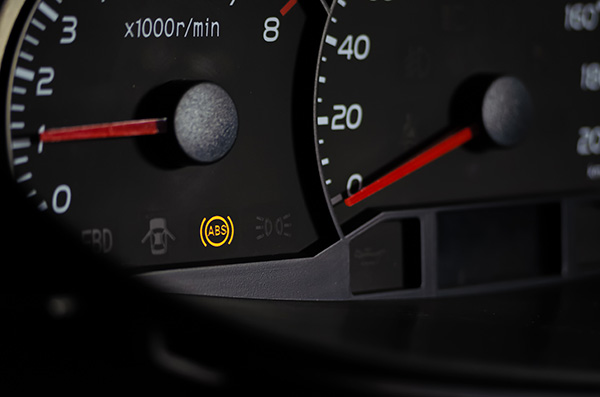
Seeing the traction control and ABS lights on at the same time can make your stomach drop. The car may still drive normally, the brakes may feel fine, and you start wondering if it is a sensor glitch or something you can ignore for a few days.
The truth is, you can often drive the vehicle carefully, but you should assume the safety systems that help you in slick or panic situations may not be working. Knowing what those lights usually mean and when the situation becomes risky helps you decide what to do next.
What ABS And Traction Control Actually Do
ABS helps prevent wheel lock-up during hard braking. Instead of the tires skidding, ABS rapidly pulses brake pressure so the tires keep rotating and you can maintain steering control. Traction control helps prevent wheelspin during acceleration by reducing engine power and, on some vehicles, applying brake pressure to a spinning wheel.
When both lights are on, it often means the car has disabled these systems because it detected a fault. Normal braking usually still works, but the extra assistance that keeps the car more stable during a hard stop or on a slick road may be unavailable.
Why The Lights Often Come On Together
ABS and traction control share information from wheel speed sensors and other inputs. If the computer loses a reliable wheel-speed signal, it may shut down both systems. The same can happen if there is a problem with steering angle data, yaw rate sensors, or module communication.
This is why a simple issue, like one bad wheel speed sensor or a damaged sensor wire, can trigger multiple warning lights. It is also why the car can feel totally normal until you need ABS in a hard stop or traction control in the rain.
When It May Be Reasonably Safe To Drive Short-Term
If the lights come on and the vehicle still brakes normally, steering feels normal, and there are no new noises or vibrations, you can often drive it to a shop or get through a short commute carefully. The key is to drive as if you do not have ABS or traction control, because you probably do not.
That means increasing following distance, braking earlier, and avoiding aggressive throttle on wet pavement. If road conditions are dry and you are driving gently, the immediate risk is often lower, but the lights are still telling you something is wrong and should be diagnosed soon.
When You Should Stop Driving And Get It Checked Right Away
There are situations where continuing to drive is not a smart plan. If you notice any of these, it is better to park the car and arrange help.
- The brake pedal feels soft, spongy, or sinks more than usual
- The vehicle pulls hard to one side when braking
- Braking distance feels longer, or you have to press the pedal much harder
- The ABS light is on, along with a red brake warning light
- You hear grinding, scraping, or a new clunk from a wheel area
- The steering feels heavy, erratic, or the car feels unstable in normal turns
If any of these are happening, the issue may not be limited to the electronic safety systems, it may involve the base brake or steering components, and that raises the stakes.
What Changes In The Way The Car Drives Without These Systems
Without ABS, hard braking on slick pavement can lock the wheels, and a locked wheel skids instead of gripping. That can increase stopping distance and reduce your ability to steer around an obstacle. Without traction control, you may get wheelspin when pulling away, especially on wet roads, gravel, or painted lines at intersections.
In practical terms, you want to drive with less urgency. Smooth throttle input, earlier braking, and avoiding sudden lane changes become more important. The car will still respond, but it may not have the extra support it normally uses to correct traction problems.
Common Causes That Trigger Both Lights
Some causes are straightforward, and some are more involved. Here are the ones we see most often:
- A wheel speed sensor that has failed or has a damaged wire
- Dirt, rust, or debris interfering with the sensor reading at the wheel hub
- A failing wheel bearing that creates a bad sensor signal or inconsistent wheel speed data
- Low system voltage from a weak battery or a charging issue that confuses modules
- ABS module or hydraulic unit issues are less common but possible
- Steering angle sensor or yaw sensor faults, depending on vehicle design
The reason testing matters is that multiple issues can create the same lights. Reading codes and checking live wheel speed data can point directly to the corner or component that is not reporting correctly.
Get ABS And Traction Control Diagnostics in Clifton Park, NY, with Gil's Garage Inc
We can scan the system for fault codes, test wheel speed sensor signals, and pinpoint why your ABS and traction control lights are on. We’ll also check related components like wheel bearings and wiring, so the fix addresses the real cause.
Call Gil's Garage Inc in Clifton Park, NY, to schedule a diagnostic inspection and get your safety systems back online.