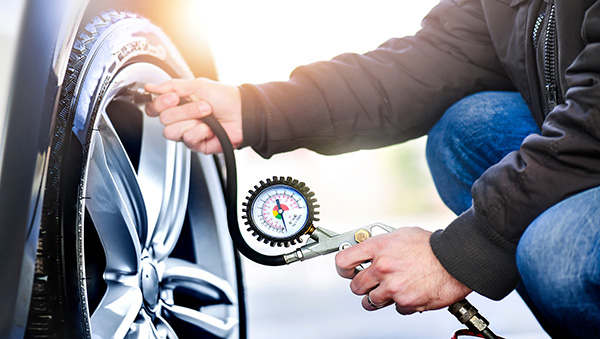
The first truly cold night of the season has a way of making tire pressure warning lights appear all over town. Your tires may have looked fine the day before, yet the next morning the TPMS light is glowing as soon as you start the car.
In many cases, nothing suddenly broke overnight. The air pressure inside the tires simply dropped as the temperature fell. Cold weather can expose tires that were already a few pounds low, which is why this problem often shows up right after a sharp temperature drop.
Cold Air Reduces Tire Pressure
Air contracts as it gets colder. Inside a tire, that means the pressure drops when outside temperatures fall.
A common rule of thumb is that tire pressure changes by about 1 PSI for every 10-degree Fahrenheit change in temperature. So if the weather drops 30 degrees overnight, a tire that was already close to the TPMS warning threshold may suddenly fall low enough to turn the light on.
Your Tires May Have Been Slightly Low Already
A cold morning doesn't always cause the entire pressure loss. Sometimes it simply reveals a tire that was already underinflated.
Tires naturally lose small amounts of air over time. A slow bead leak, valve stem problem, tiny puncture, or normal air loss can leave the pressure a few pounds below specification without triggering the warning light during warmer weather. Once temperatures drop, the extra pressure loss pushes the tire below the system's threshold.
Check Tire Pressure When the Tires Are Cold
The best time to check tire pressure is before you drive the vehicle far. Driving heats the tires, and that heat temporarily raises pressure.
Use the pressure specification listed on the driver's door placard rather than the maximum number molded into the tire sidewall. The sidewall number is not the recommended everyday inflation pressure for your vehicle. We set the tires to the vehicle specification, then check whether the warning clears after the system has had a chance to update.
All Four Tires Can Drop at the Same Time
If all four tires were inflated equally before a cold snap, they can all lose similar pressure overnight. The TPMS light may come on even though none of the tires has a puncture.
That is different from finding one tire much lower than the others. If three tires are around 32 PSI and one is sitting at 22 PSI, we start looking for a leak rather than blaming the weather. Comparing all four pressures is one of the quickest ways to tell whether the cold alone is likely responsible.
A Tire That Keeps Losing Air Needs an Inspection
Adding air once after a major temperature drop is normal. Adding air to the same tire every week is not.
- Common leak points include:
- A nail or screw in the tread
- A leaking valve stem
- Corrosion around the wheel bead
- A damaged wheel
- A previous repair that is leaking
- A small tread puncture
- A cracked or damaged tire
If one tire repeatedly loses pressure, an inspection can usually determine where the air is escaping. Topping it off over and over only hides the problem.
The TPMS Sensor Itself Can Also Fail
Each TPMS sensor has a small internal battery. Those batteries eventually wear out, and the sensor can stop sending reliable information to the vehicle.
A system problem often looks different from a simple low-pressure warning. On many vehicles, the TPMS light flashes after startup and then stays on when a sensor or communication fault occurs. The exact behavior depends on the vehicle, so we check the system rather than assuming a flashing light means one tire needs air.
Do Not Inflate Tires Based on the Warm Afternoon Temperature
Cold mornings and warmer afternoons can create a noticeable pressure swing. If you keep adding air every morning without checking against the correct specification, the tires can end up overinflated once the weather warms.
Set the pressures when the tires are cold and use the vehicle's recommended number. You do not need to chase every one- or two-pound change throughout the day. What matters is starting with the correct cold inflation pressure and checking again after major seasonal temperature changes.
Low Tire Pressure Affects More Than the Warning Light
Driving on underinflated tires creates extra sidewall flex and heat. It can also change steering response, braking feel, fuel economy, and tread wear.
A significantly low tire is more vulnerable to pothole damage because the sidewall has less support between the road and wheel. Regular maintenance should include pressure checks even if the TPMS light is off. The warning system is a backup, not a replacement for checking the tires yourself.
Why the Light May Turn Off Later in the Day
You may leave home with the TPMS light on and notice it disappears after twenty minutes of driving or when the afternoon warms up. That happens because tire temperature rises and pressure increases.
The light going out does not necessarily mean the tire pressure was correct in the morning. If the system was triggered by low pressure, you should still check and adjust the tires to specification. Otherwise, the warning will likely return the next cold morning.
Get Tire Pressure and TPMS Service In Clifton Park, NY, With Gil's Garage Inc
If your tire pressure light comes on after a cold night or one tire keeps losing air, Gil's Garage Inc in Clifton Park, NY, can check the pressures, look for leaks, and test the TPMS system if the warning isn't clear.
Schedule a tire check before low pressure leads to uneven wear, poor handling, or damage from the next pothole.